Successful technology initiatives rarely fail because of technology, they fail due to unclear objectives, poor stakeholder alignment, inadequate planning, or
Real Challenges. Real Solutions. Real Results.
Explore how we help organizations overcome complex challenges and achieve measurable business impact through technology and strategy.
At Reasoned Insights, our consulting approach is built on seven proven principles that ensure every engagement delivers measurable

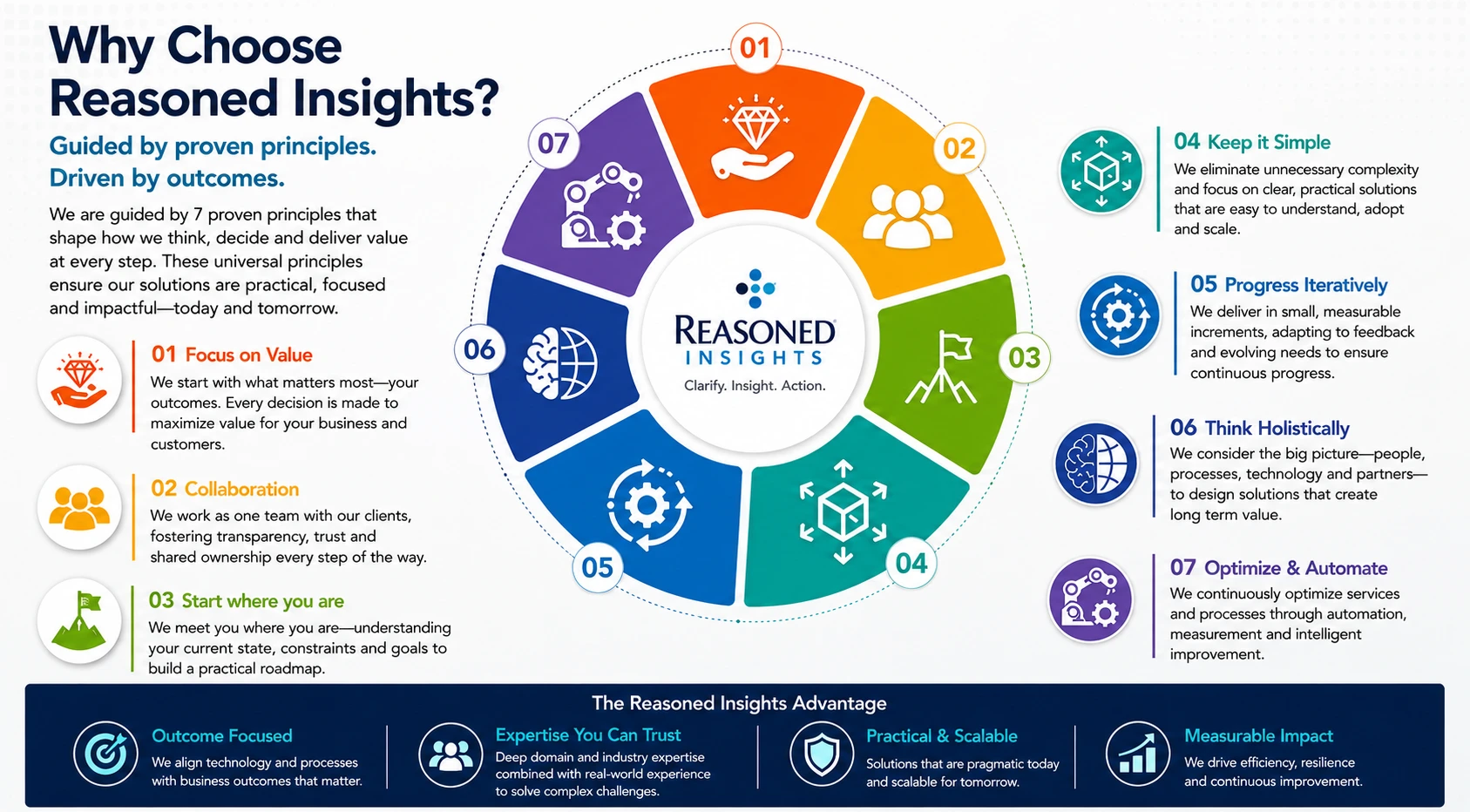
Why Choose Reasoned Insights?
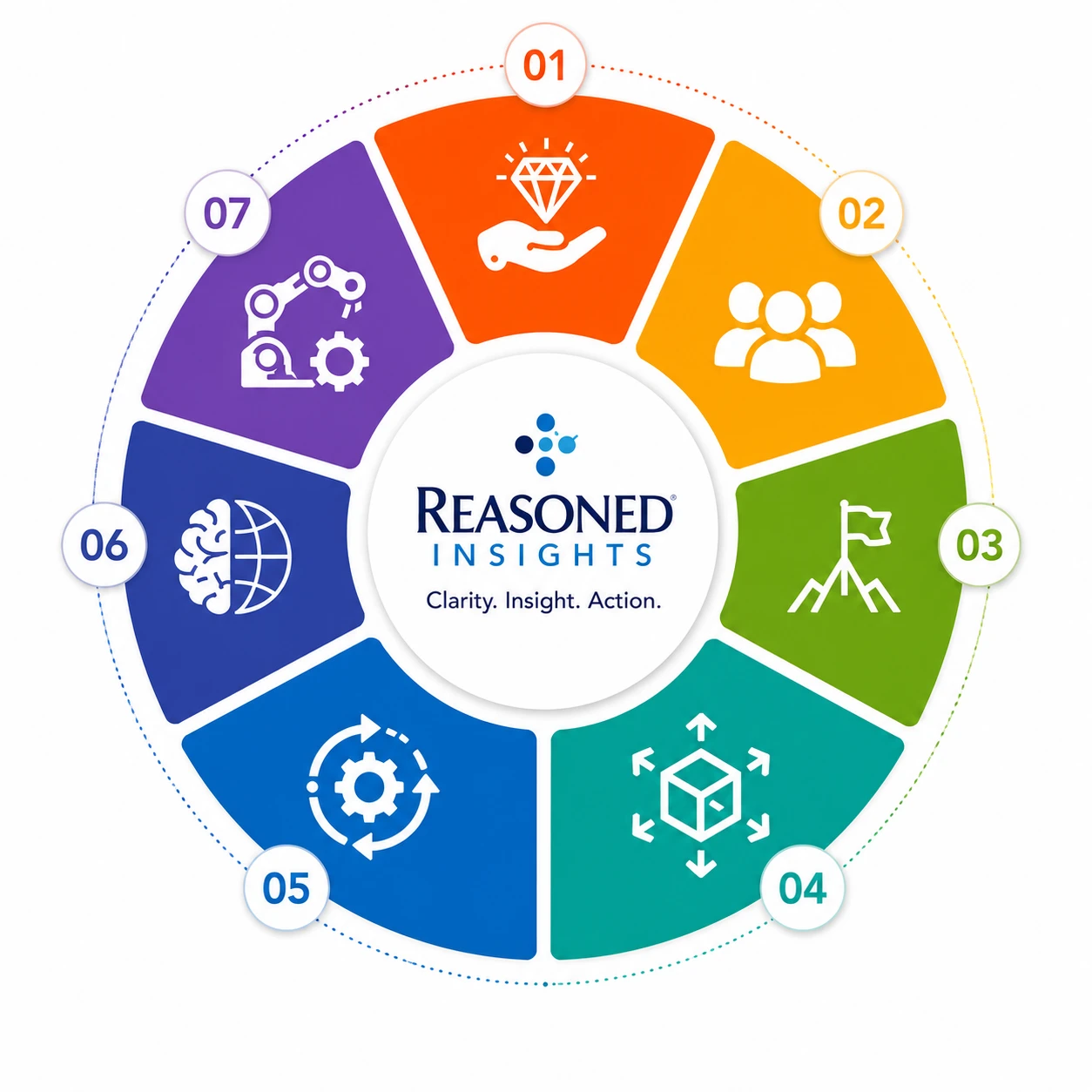
At Reasoned Insights, our consulting approach is built on seven proven principles that ensure every engagement delivers measurable business value. We tailor practical, scalable solutions that align technology investments with strategic business objectives.

01. Focus on Value
2. Collaboration
3. Keep it Simple
Complexity slows innovation. We design practical, intuitive solutions that are easy to implement,
manage, and scale, enabling organizations to realize benefits faster while minimizing operational
risk.
7. Optimize & Automate
4. Think Holistically
5. Start Where You Are
6. Progress Iteratively
The Reasoned Insights Advantage
These guiding principles shape every solution we deliver, from Product Strategy and Cloud Transformation to Agentic AI, Industrial IoT, and Digital Modernization. The result is technology that is practical, scalable, outcome-focused, and engineered to deliver measurable business value.
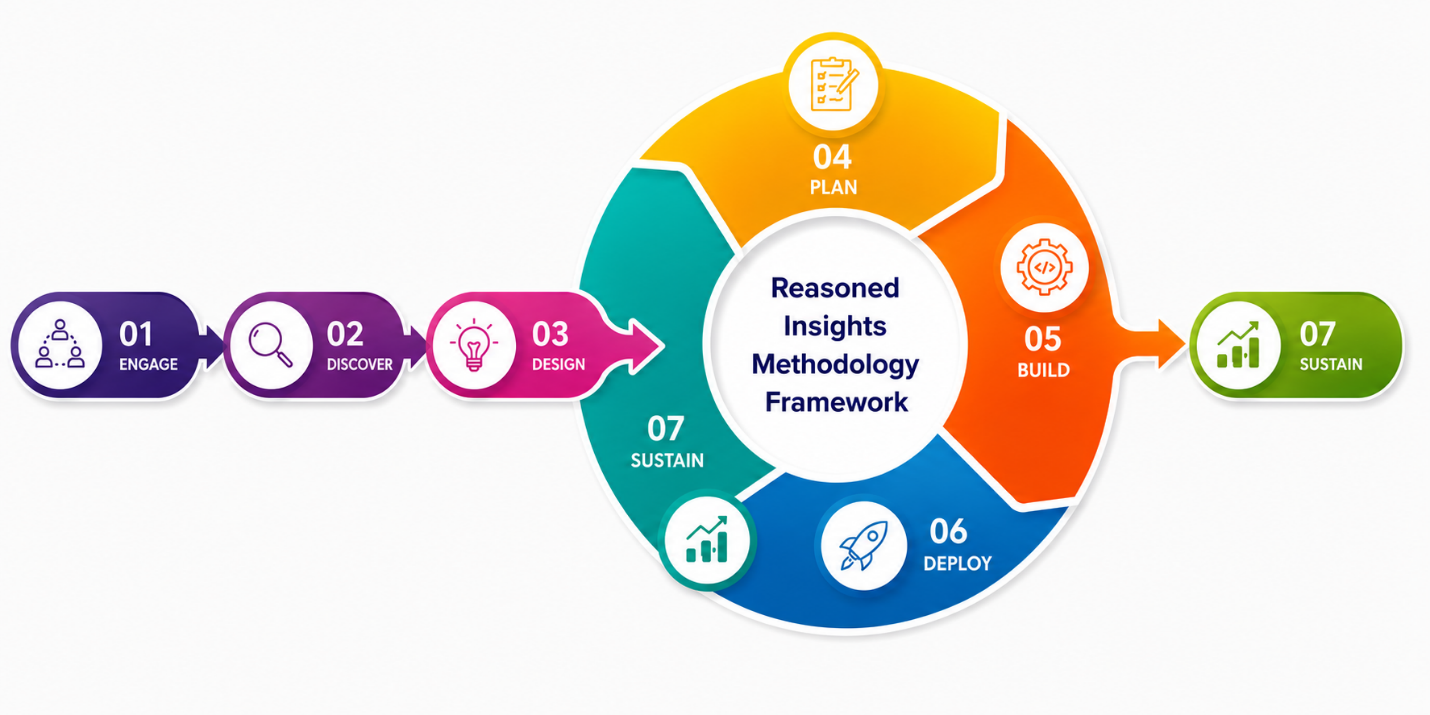
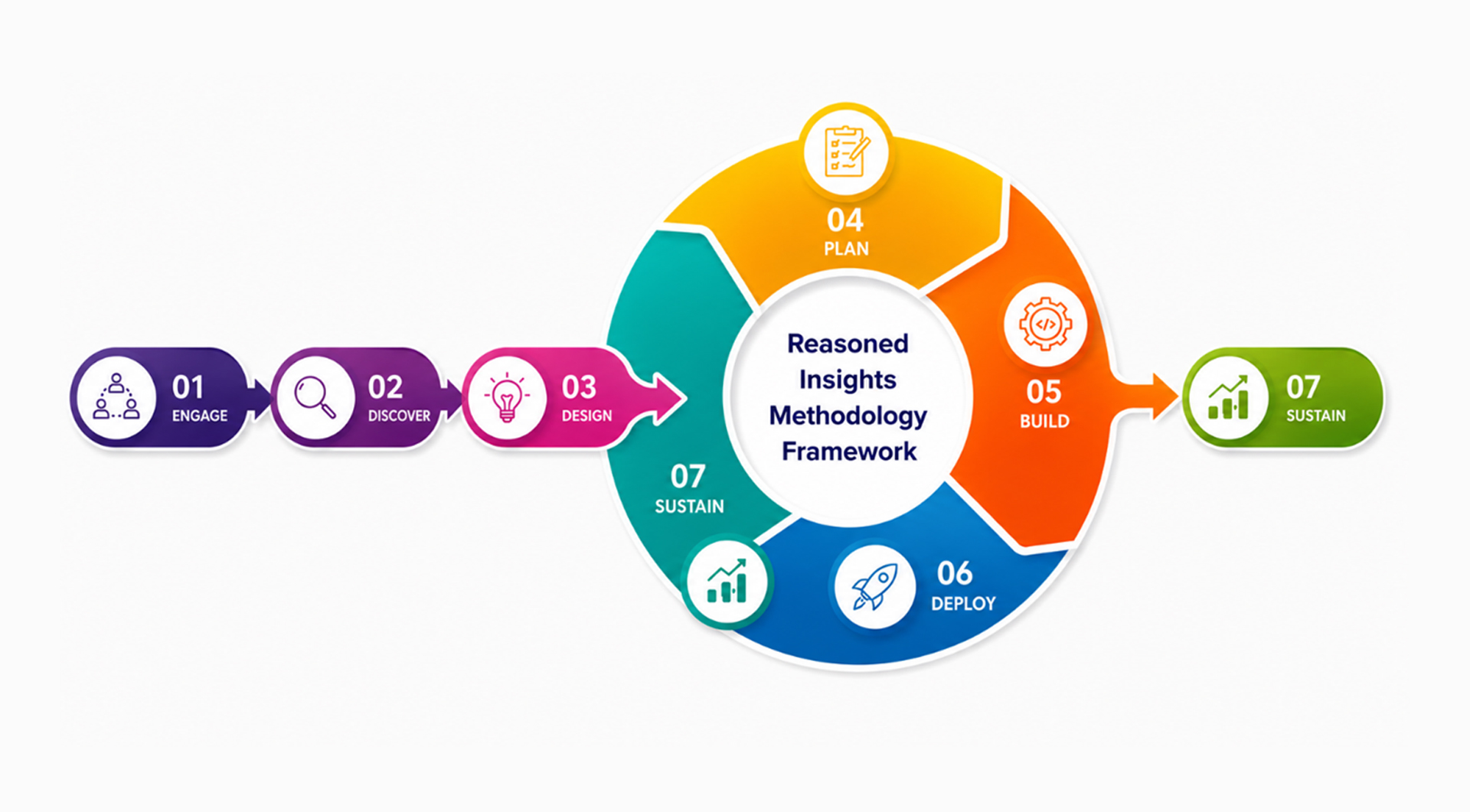
The Reasoned Insights Methodology Framework
1. Engage — Establishing the Foundation
Every successful engagement begins with alignment. During the Engage phase, we work closely with stakeholders to understand strategic objectives, define commercial expectations, establish governance, and agree upon measures of success. This stage ensures all participants share a common vision before implementation begins.
Key activities include project kickoff sessions, defining governance structures, identifying executive sponsors, establishing communication channels, and finalizing contractual agreements such as Statements of Work (SOWs). By investing in alignment early, we minimize ambiguity, reduce project risk, and create a strong foundation for execution.
3. Design — Creating the Future State
5. Build — Engineering with Quality
The Build phase transforms ideas into working software through iterative development and continuous validation. Engineering teams develop features in manageable increments while maintaining rigorous quality standards through CI/CD, automated testing, peer reviews, and API-driven integration practices.
Rather than postponing quality until the end of the project, validation is embedded throughout the development lifecycle. This iterative approach reduces technical debt, improves software quality, and enables stakeholders to review working functionality early and often.
7. Sustain — Continuous Improvement
Technology implementation is only the beginning of the journey. During Sustain, we provide ongoing operational support, performance monitoring, maintenance, and continuous optimization to ensure the solution continues to deliver value as business needs evolve.
Using operational metrics, user feedback, and system performance data, we proactively identify opportunities for improvement while maintaining security, reliability, and platform stability. Whether supporting cloud-native platforms, enterprise applications, AI solutions, or Industrial IoT deployments, our objective is to maximize long-term business value through continuous enhancement rather than reactive maintenance.
2. Discover — Understanding the Current State
4. Plan — Building the Roadmap
Careful planning significantly improves execution. During the Plan phase, we convert the solution blueprint into an actionable delivery strategy by defining milestones, sprint plans, resource allocation, dependencies, budgets, and risk mitigation strategies.
Whether employing Agile, SAFe, or hybrid delivery methodologies, our planning approach emphasizes transparency and predictability. We identify critical risks early, establish realistic timelines, and ensure the right people, skills, and resources are available to deliver successfully.
6. Deploy — Delivering with Confidence
Deployment represents the transition from project delivery to business value realization. Our objective is to move solutions into production safely, efficiently, and with minimal operational disruption.
Deployment activities include User Acceptance Testing (UAT), production readiness validation, infrastructure provisioning, data migration, release management, user enablement, and operational handover. By following structured deployment practices, we minimize implementation risk while accelerating adoption across the organization.