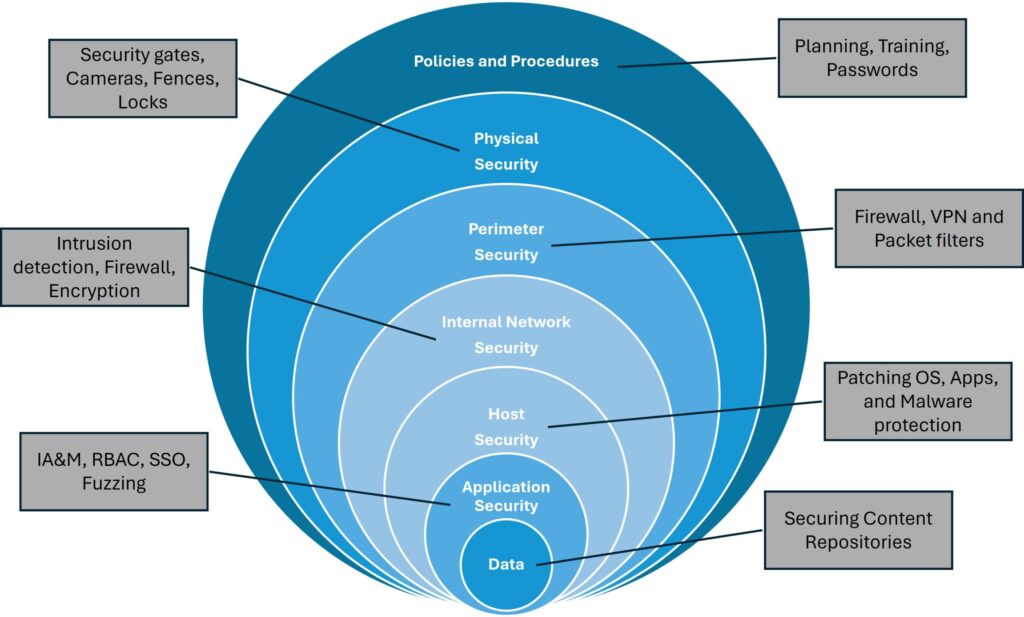
In an era dominated by cloud native and hybrid cloud technologies, where data traverses virtual boundaries at unprecedented speeds, the need for a robust and adaptive cybersecurity framework has never…
Kubernetes has become a cornerstone for managing containerized applications in the cloud. It simplifies the deployment, scaling, and operations of application containers, but the complexity of these systems requires robust…
In the rapidly evolving landscape of cloud-native infrastructure, developers and cloud operators face a myriad of challenges in ensuring effective observability. The dynamic nature of these environments, coupled with the…
What does it mean to be “cloud native”? Cloud-native infrastructure refers to the design, deployment, and management of IT resources that leverage cloud computing principles. It involves building and running…
In an earlier blog post, Kubernetes Overview, we introduced Kubernetes. We introduced key capabilities of Kubernetes i.e. Portability, Extensibility, Declarative Configuration and Automation. Let’s take a closer look at these…
In today's digital world, many services we rely on, like online shopping, social media, and streaming, run on complex software systems. When something goes wrong with these systems, it can…
Kubernetes is an open-source platform for automated orchestration and management of Containerized applications. Before dwelling into the specifics, let’s briefly explore its origins. Kubernetes is a Greek word, meaning “helmsman”…
Natural Language Processing (NLP) gives the machines the ability to read, understand and derive meaning from human languages. Nearly 90% of data generated today from various channels is unstructured such…
In the world of artificial intelligence (AI) and data science, we often hear about supervised and unsupervised learning. However, there is a powerful and increasingly popular middle ground known as…